
When developing our products, my co-founders and I discussed the direction of the product.
Initially, we wondered if creating a Power System IP that controls power within the chip would sell well.
Everyone agrees that power is important.
However, when we actually looked into the market, unfortunately, the demand for power control within the SOC was lower than expected in Korea.
Since most chip designs are aimed at benchmark scores rather than mass production, we didn’t feel the need for system-level power control.
However, the reason NVIDIA products are considered the best in terms of power efficiency isn’t simply because of their excellent benchmark results, but because they offer the highest power efficiency in real-world applications.
From this perspective, I started my business with the idea of building and selling Power Systems,
but I didn’t know if the market actually needed them, so I even considered closing the company.
Like all entrepreneurs,
I started with rosy dreams, but soon realized my thinking was wrong. I had completely misdefined the market.
So I changed my direction.
What would semiconductor design engineers like?
What do people in the semiconductor industry want now?
How could I leverage my nearly 20 years of experience as a semiconductor engineer?
Ultimately, I decided that
instead of simply providing a system, we needed to change the very language used to design systems.
We needed to bring more chips to market with unparalleled convenience.
And for this innovation to be possible,
it had to be a solution that wasn’t simply automated, but truly accessible to everyone.
To create more chips with overwhelming convenience and ease of use,
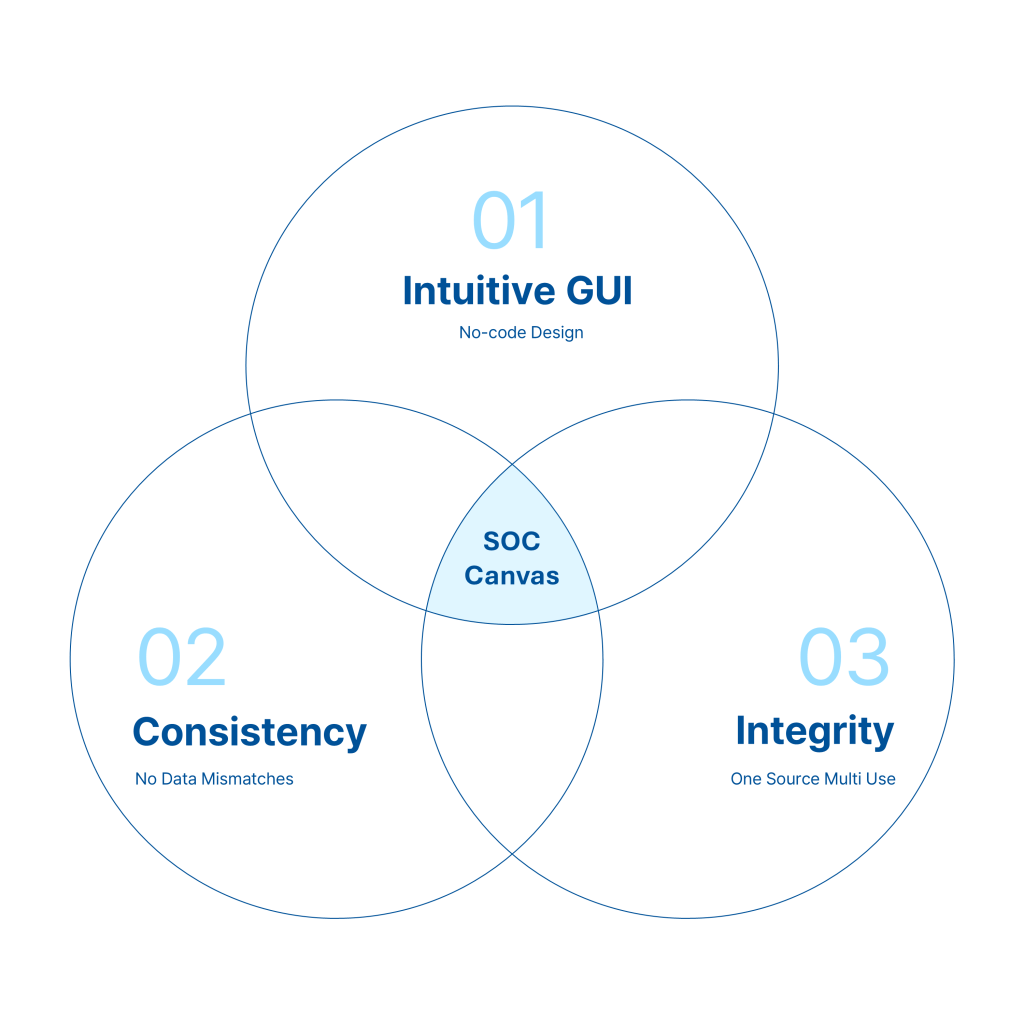
1. the interface must be intuitive enough for anyone to understand (Intuitive GUI)
2. a single data source must be able to process everything (Integrated Data)
3. all systems must operate under a single standard and language (Consistency).
Now, let’s examine how these three philosophies are incorporated into products, one by one.
제품을 만들 때 공동창업자들과 제품의 방향성에 대해 많은 논의를 했습니다.
처음엔 칩 내부에서 Power를 제어해주는 Power System IP를 만들면 팔리지 않을까?로 시작했습니다.
Power는 다들 중요하다고 하니까요.
그런데 실제로 시장을 살펴보니, 불행하게도 국내에서는 SOC 내부에서 Power를 제어하는 것에 대한 수요가 생각보다 낮았습니다.
대부분의 칩 설계가 양산보다는 벤치마크 점수를 목표로 하는 것이 현실이라, 시스템 레벨의 Power 제어 필요성을 느끼지 못했던 것 같습니다.
하지만 엔비디아의 제품이 전성비가 가장 뛰어나다는 평가를 받는 이유는 단순히 벤치마크에서의 결과가 훌륭해서가 아니라, 실사용에서 전력효율이 가장 좋기 때문입니다.
이런 관점에서 Power System을 만들어 팔면 되겠다 하고 창업을 했는데,
정작 시장이 Power Sysetem이 필요한 지를 모르는 상황이라, 회사를 접어야 하나 고민도 많이 했습니다.
모든 창업자가 그렇겠지만,
장밋빛을 꿈꾸고 창업했는데, 창업하고 얼마 지나지 않아서 자신의 생각이 틀렸다는 것을 알게 된 것입니다. 아예 시장 정의를 잘못 내렸던 거죠.
그래서 방향을 바꿨습니다.
반도체 설계 엔지니어들이 뭘 좋아할까?
반도체 업계에 있는 분들은 지금 원하는게 뭘까?
내가 20년 가까이 쌓은 반도체 엔지니어 경험을 어떻게 살려야할까?
결국 내린 결론은,
단순히 시스템을 제공하는 것이 아니라 시스템을 설계하는 언어 자체를 바꾸자.
압도적인 편의성으로 더 많은 칩들이 세상에 나올 수 있게 하자.
였습니다.
그리고 이 혁신이 가능하려면 단순한 자동화가 아니라,
정말 누구나 쉽게 사용할 수 있는 솔루션이어야 했습니다.
누구나 쉽게 사용할 수 있는 압도적 편의성으로 더 많은 칩을 만들려면,
1. 누구나 이해할 수 있도록 인터페이스가 직관적이어야하고 (Intuitive GUI)
2. 한 개의 데이터로 모든 것을 처리할 수 있어야 하며 (Integrated Data)
3. 모든 시스템은 하나의 기준과 언어로 움직여야 합니다. (Consistency)
이제 이 3가지 철학이 제품에 어떻게 녹아들었는지 하나씩 살펴보겠습니다.